Glamping promises comfort in the wild, yet first-timers often arrive without the small essentials that make a luxury tent stay actually comfortable. A real bed with crisp linens sounds dreamy until you realize you forgot a sleep mask, warm socks for the chilly evening, or a way to make coffee in the morning. The gap between a great glamping trip and a frustrating one usually comes down to packing smart, not packing more.
This checklist breaks everything down into practical sections: what your glamping site already provides, which clothing layers to bring, the sleep and comfort items that matter, toiletries and personal care, food and camp kitchen gear, plus booking timing and seasonal extras. Work through it before you zip up your bag, and you will walk into that canvas tent prepared for early sunrises, dewy evenings and everything in between.
What Your Glamping Site Already Provides
The biggest packing mistake first-time glampers make is bringing gear the site already supplies. Most glamping tents come with a real bed dressed in linens, blankets and pillows, so you can leave the sleeping bag at home. That single omission frees up serious space in your car and saves you from arriving at a comfortable tent with gear made for a campground floor. It also means less to carry, less to wash when you get home, and no awkward Return trip with a damp bedroll stuffed in the trunk.
Before you pack anything else, message the host or check the listing carefully. A five-minute email can save you from hauling a cooler, a full set of pots or a stack of towels you will never touch. Just as importantly, it tells you how ambitious you can get with meal planning and how warm you need to dress after dark, especially during shoulder-season stays when hosts often mention whether heating is available. Hosts usually reply quickly and are happy to be specific.
- Towels and linens: ask whether bath towels, beach towels and spare blankets are included, or whether you should bring your own quick-dry versions.
- Kitchenware and cold storage: confirm if there is a mini-fridge, cooler, plates, cutlery and a stove or kettle, since this shapes your entire food plan.
- Cooking setup: a fire pit or grill on-site means you pack charcoal instead of a full camp stove.
- Power and climate: check whether lighting, heating or air conditioning is provided, which tells you whether to pack extra layers or a power bank for charging phones.
Once you have this list of answers, write your own packing checklist around it. You will pack lighter, spend less and enjoy the tent the way it was meant to be enjoyed.
Clothing Layers for a Glamping Trip
Glamping sites rarely have central heating that responds to a thermostat, so the smartest thing you can do is pack layers. Plan for a typical 10-15°C (18-27°F) swing between afternoon and late evening. That means t-shirts for sunny hours, a fleece or wool mid-layer for the campfire, and a windproof jacket on top when the breeze picks up after sunset. The trick is to think in removable stages rather than one bulky coat, because you will constantly be adding and shedding layers as you move between the tent, the fire pit and the dining area.
Even in the height of summer, evenings often bring dew or a surprise shower, and canvas tents have a way of feeling damp once the sun drops. Waterproof outerwear and quick-dry trousers earn their place in your bag every single month of the season. Cotton jeans, once wet, stay cold and heavy for hours, so they are the first thing to skip. Choose fabrics that breathe during the day and insulate at night, and you will stay comfortable from breakfast to bedtime without ever feeling caught out by the weather.
- Two footwear options: sturdy closed-toe shoes or light hiking boots for gravel paths and trails, plus sandals for the tent interior and shared showers.
- Shoulder-season warmth: in May, June and September, nights can fall to 5-10°C (41-50°F), so add a beanie and thick socks that keep you warm in bed.
- Moisture management: merino or synthetic base layers dry overnight, which matters if you get caught in rain on a morning walk.
- One spare set: pack an extra pair of socks and a backup shirt sealed in a zip-top bag, so a wet afternoon never ruins the whole evening.
Sleep and Comfort Essentials
A luxury tent is still a tent. Canvas walls let in the first light of dawn and carry every conversation from the neighboring pitch, which is why a sleep mask and earplugs are the two items experienced glampers never leave behind. They weigh almost nothing and turn a restless night into a full eight hours. If you are a light sleeper, foam earplugs with a higher noise-reduction rating work better than the soft foam pairs you get on flights, and a small clip-on fan can double as white noise on warm nights.
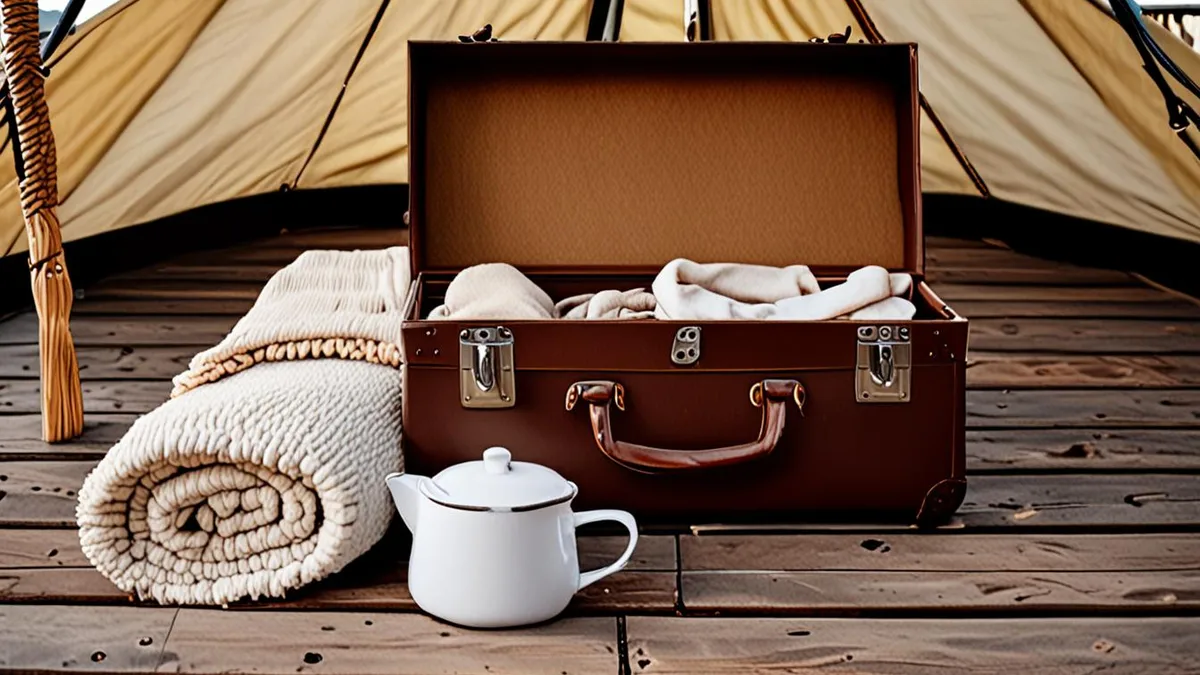
Comfort also matters in the hours you spend awake. A lightweight throw makes lounging outside on a cool evening genuinely pleasant, and a headlamp is essential since most sites have dim pathway lighting after dark. Round out your kit with the small everyday items that hotel stays usually cover for you, because at even the best glamping sites you will notice their absence the moment you need them.
- Your own pillow: if you are particular about sleep, a compressed travel pillow takes little space and removes the biggest variable in how well you rest.
- Headlamp with spare batteries: choose one with a red-light mode so you can find your way without blinding other guests.
- Reusable water bottle: fill it at the site’s water station before bed so you are not fumbling to the tap at midnight.
- Small daypack: handy for carrying layers, snacks and sunscreen on walks around the property or to a nearby trailhead.
- A book or downloaded entertainment: many sites have limited or no Wi-Fi, so plan evening entertainment that does not depend on a signal.
Toiletries and Personal Care
Glamping toiletries need a slightly different approach than your everyday bathroom bag. Many eco-focused sites run on sensitive septic systems, so regular soaps and shampoos can cause real problems once they go down the drain. Biodegradable options are inexpensive, widely available and pack just as well as the standard versions, so there is little reason not to switch.
Shower situations vary a lot between sites. Some luxury tents come with private en-suite bathrooms and fluffy towels, while others rely on shared shower blocks a short walk away. Confirm what your site offers before you pack, because hauling a full bath towel to a place that provides them is wasted bag space. If showers are communal, flip-flops are non-negotiable for comfort and hygiene.
Then there are the three items people forget most often: sunscreen, insect repellent and after-bite cream. You will likely spend entire days outdoors, often near standing water or grassy meadows where insects are active at dusk. A small first-aid kit rounds out the kit and takes up almost no room.
- Biodegradable soap and shampoo: choose concentrated bars or small travel bottles, since bars last longer and leak far less in a bag.
- Quick-dry towel: pack a compact microfiber version in its own pouch so damp fabric never touches your dry clothes.
- Flip-flops or shower sandals: rubber soles with grip matter, as shared shower block floors stay wet and slippery most of the day.
- Sunscreen: bring a reef-safe or fragrance-free formula if your site sits near lakes or natural swimming spots.
- Insect repellent and after-bite cream: pack both a spray for clothing and a stick or cream for exposed skin, since each works better in different conditions.
- Small first-aid kit: include blister plasters, painkillers and antiseptic wipes, plus any personal medications in their original packaging.
Food, Cooking and Camp Kitchen Gear
Camp kitchen packing starts with a simple question: what does the site actually provide? Many glamping sites offer a fire pit, a grill or even a communal kitchen, and each setup demands different gear. A grill or fire pit calls for foil, skewers and long tongs, while a full kitchen may mean you only need ingredients. Ask before you pack a single pan.
If there is no fridge in your tent, a cooler with ice packs becomes essential. Pack it with the meals you will eat first at the top, and bring non-perishable staples like pasta, canned beans and oats as backup in case the cooler underperforms or a planned cookout gets rained out.
Whatever the setup, a few basics make camp cooking far less frustrating. A sharp knife and a small cutting board turn grocery-store ingredients into actual meals, and a wash-up kit with a sponge and biodegradable soap keeps things hygienic. And do not overlook coffee: on a cold morning, a portable pour-over or French press beats instant coffee by a wide margin, and the ritual alone is worth the small pack weight.
- Foil, skewers and long tongs: heavy-duty foil does double duty for wrapping vegetables and lining grill grates, and long tongs keep your hands clear of flames.
- Cooler and ice packs: freeze water bottles instead of loose ice, since they chill just as well and become drinking water as they melt.
- Non-perishable staples: one-pot meals like couscous, dried soup mixes and tortillas need no refrigeration and cook fast over limited heat.
- Sharp knife and cutting board: keep the knife sheathed or in a rolled cloth, as loose blades in a duffel bag are a genuine hazard.
- Matches or a lighter: bring both, stored separately, because lighters fail in damp cold and matches fail when wet.
- Wash-up kit: a collapsible basin makes dishwashing easier and keeps gray water in one place, which most eco-minded sites appreciate.
- Portable pour-over or French press: pair either with pre-ground coffee in a sealed jar, measured out by the cup so mornings require zero thinking.
Booking Timing and Seasonal Packing Extras
Good packing starts long before you zip a bag, because the best tents go first. For summer weekends, book 2-3 months ahead; for holiday periods, plan 4-6 months out. Early booking is not just about availability. The most sought-after tents, the ones with the best views, the most privacy or the largest decks, are the first to be reserved, and knowing which tent you got tells you exactly what extras to pack.
Timing also shapes your kit. If you are going in May, June or September, add a hot water bottle, an extra blanket and a thermos. Shoulder-season nights can feel surprisingly cold once the sun drops, and these three items cost little but transform an evening outside or a night under canvas. Peak-season trips from July to August flip the problem: extra sun protection and a canopy or shade shelter matter far more than warm layers.
Budget expectations matter too. A standard glamping tent in popular regions typically runs $150-400 per night, so a well-packed bag helps you get your money’s worth instead of buying overpriced basics at the site shop.
- Book early and pick your tent deliberately: when reserving, ask which tents get afternoon shade or shelter from wind, since that answer changes how much sun protection and extra layering you bring.
- Hot water bottle: fill it at the communal kitchen before bed and slip it between the sheets ten minutes early for a pre-warmed mattress.
- Extra blanket: a compact wool or fleece throw works for both the bed and chilly evenings around the fire pit.
- Thermos: a wide-mouth model doubles as a soup container on cold shoulder-season days, not just a drink holder.
- Extra sun protection: pack a wide-brimmed hat and lip balm with SPF alongside sunscreen, since reflected light from water and sand catches people out.
- Canopy or shade shelter: choose a lightweight pop-up style you can carry from your tent to a picnic area, and check whether the site has rules about staking or footprint size.
Ready to Zip Up Your Bag
Many first-time glampers arrive at a beautiful safari-style tent only to realize they left behind the small things that make the stay actually work. The smartest approach is to build your packing list in stages: begin with what your host supplies, then add personal items around that foundation. A quick email to the site before you pack can save you from hauling gear you will never use.
Evenings are usually where a glamping trip succeeds or fails. Days may feel mild, but canvas cools quickly after sunset, and dim pathways between tents make a reliable light source more than a nice-to-have. Match your kit to the season and the destination rather than copying a generic list, and check the current nightly rate for your dates so you know how much comfort you are paying for.
Get these small essentials right and your tent stops feeling like a tent and starts feeling like a home base for hikes, campfires and slow mornings. Got a packing tip of your own, or a glamping trip coming up? Leave a comment or share this article.