Choosing when to book a Banff mountain lodge is harder than it looks. Summer promises warm trails and turquoise lakes but brings the year’s highest prices and thickest crowds. Winter delivers snow, fireplaces and quieter streets, yet cold temperatures and short days change what you can actually do. Many travelers end up unsure which season gives the best mix of weather, cost and elbow room.
This season guide breaks the decision into clear parts. We compare summer, winter and the shoulder seasons, explain how far ahead to book your lodge, and weigh up basing yourself in the Banff townsite versus Lake Louise. A short wrap-up pulls the advice together so you can match the right window to the trip you actually want. By the end, you should know not just where to stay, but exactly when.
Why Timing Matters for a Banff Mountain Lodge Stay
Banff does not have one travel season; it has several, and they barely resemble each other. Summer brings warm days, long daylight and full access to trails and lakes. Winter replaces all of that with snow, skiing and a town that moves at a slower pace. Lodge pricing swings just as sharply, which means the same room, with the same view, can feel like two completely different trips depending on when you check in.
Summer, roughly late June through early September, is peak season in every sense. It is hiking and lake season, so you can expect the year’s highest rates and the heaviest crowds at major attractions. If you want guaranteed access to everything, this is the window, but you pay for it in both money and patience.
Winter changes the whole equation
From December through March, Banff turns into a ski base. The streets are quieter, midweek lodge rates drop noticeably, and the town’s atmosphere shifts from sightseeing bustle to fireside evenings. For some travelers this is the better trip, even without warm weather.
That is why timing matters more than the lodge itself. A great lodge booked in the wrong season can disappoint, while a modest one in the right window can deliver exactly the trip you imagined. The sections below walk through each season so you can pick your window first, then find the room to match.
Summer: Late June to Early September
Summer is Banff at full power. From late June through early September, daytime highs typically sit between 18°C and 22°C, which is comfortable hiking weather without the extreme heat you find at lower elevations. Trails are snow-free, canoe rentals are running, and every gondola and viewpoint in the park is open for business.
Lake Louise, about 40 minutes from the Banff townsite, is the classic summer day trip. Arrive early if you want a parking spot and a quieter shoreline, because this is one of the busiest attractions in the Canadian Rockies during peak season.
What summer costs and what to expect
Peak demand shows up directly in lodge pricing. Expect rates of roughly CAD 350-600 per night for a Banff mountain lodge in summer, with the highest prices in July and August. Major attractions also see their heaviest crowds, so build buffer time into your days rather than planning back-to-back stops.
The payoff is daylight. In July, light lasts well past 9 pm, which effectively adds hours to every day. You can hike in the morning, canoe in the afternoon and still fit in a scenic drive or a patio dinner before dark.
Summer suits first-time visitors best. If you want full access to trails, lakes and gondolas, and you are willing to book early and share the park with plenty of other travelers, this is the season that delivers the complete Banff experience.
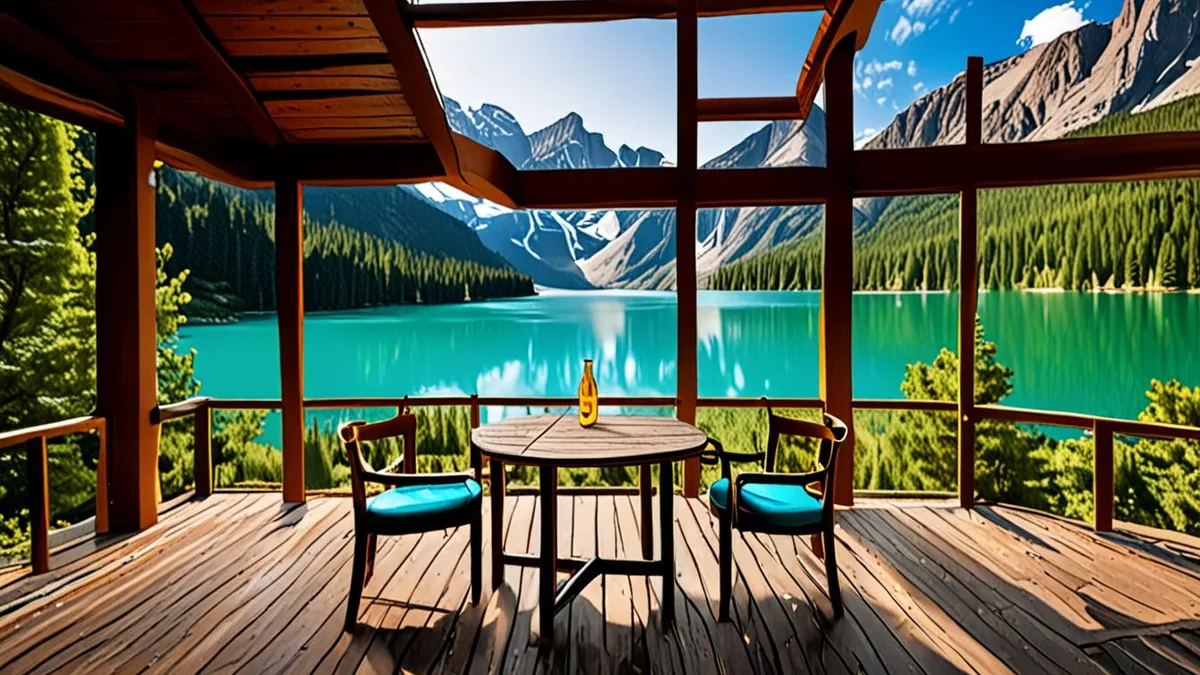
Winter: December to March
Winter turns a Banff mountain lodge stay into something closer to a retreat. From December through March, temperatures often sit between -5°C and -15°C, which sounds brutal until you realize it creates exactly what winter travelers come for: reliable snow at the nearby ski resorts and lakes frozen into pale, photogenic sheets of ice. Lake Louise in winter is a different attraction entirely from its summer self, and photographers tend to prefer it.
Pricing softens too. Lodge rates typically run CAD 250-450 per night, and midweek stays are noticeably cheaper than weekends. If your schedule allows a Sunday-to-Thursday trip, you can feel the difference in your bill without downgrading your room.
The real shift is in what the lodge itself offers. In summer, a fireplace or hot tub is a nice extra after a day of hiking. In winter, it becomes the main event, and the quality of those amenities can matter more than the view.
What to look for in a winter lodge
- A real fireplace or wood stove in your room or a shared lounge, so the coldest evenings become part of the experience rather than something to endure.
- Outdoor hot tubs or heated pools where you can soak with snow falling around you, a combination Banff lodges do particularly well.
- Ski storage and shuttle access to the nearby resorts, which saves you from driving icy mountain roads on ski days.
- An on-site spa or sauna for recovery days, since winter itineraries tend to alternate between big activity days and slow ones.
If you love the idea of pairing snowy lodge evenings with time on the slopes elsewhere, it is worth reading about ski chalets in Aspen with luxury mountain pool views to see how other resorts handle the same formula.
Winter is best for skiers, snowshoers and travelers who value atmosphere over warm weather. If fireside evenings and quiet streets appeal to you more than crowded lakeside boardwalks, this is your season.
Shoulder Seasons: May-June and September-October
If your priority is price and elbow room, aim for the shoulder seasons. Lodge rates in May-June and September-October typically run roughly 20-30% below the summer peak, which can mean the difference between a budget room and a view room for the same money. Availability is easier too, so you can often wait a little longer before committing to specific dates.
September: the sweet spot
Early to mid September is arguably the best-kept secret in the Rockies. Weather is often stable and mild, summer crowds thin out noticeably once school resumes, and the larches begin turning gold toward the end of the month, painting higher-elevation slopes in a color you won’t see any other time of year. Photographers plan entire trips around this window, and it’s easy to see why: crisp mornings, golden light and quieter trails make for excellent shooting conditions.
Late May and June: waterfalls at full power
The late spring shoulder season brings its own rewards. Snowmelt sends waterfalls thundering at full flow, and valleys are green and fresh. The trade-off is elevation: trails at higher altitudes can hold lingering snow well into June, so plan lower-elevation walks and check current trail conditions before setting out. Pack layers, since spring weather can swing quickly between warm sun and cool rain.
Who are these seasons best for? Repeat visitors who’ve already ticked off the major sights, photographers chasing specific light or foliage, and anyone who values a quiet lodge and a lower bill over guaranteed lake access. If that sounds like you, the shoulder seasons deliver Banff at its most relaxed.
How Far Ahead to Book Your Lodge
Booking windows in Banff are not just a suggestion — they are the difference between your first-choice lodge and whatever is left. The town has a limited number of rooms, and demand spikes hard around school holidays and ski weekends. Working backwards from your travel dates is the simplest way to get it right.
- Reserve summer stays 4-6 months ahead. July and August rooms in Banff sell out early, and by the time you are a month or two out, the popular lodges often have little more than scattered nights available. Booking in that 4-6 month window gives you real choice in location, room type and view.
- Book winter ski-season dates 3-4 months in advance. Regular December-to-March weekends fill steadily as ski trips get planned. If your dates include Christmas or a February long weekend, move earlier still — those weeks are the tightest of the winter calendar and can be gone well before the general ski-season window closes.
- Take advantage of shoulder-season flexibility. Stays in May-June or September-October can often be booked just 1-2 months out, and sometimes less. Because demand is softer, you can usually be pickier about room choice, and even swap dates if the forecast or your schedule changes.
- Shift your check-in to midweek whenever you can. In any season, arriving midweek typically unlocks lower rates than Friday or Saturday check-ins. This stacks nicely with the other tips — a midweek shoulder-season stay is usually the easiest to book and the easiest on the wallet.
One last habit worth building: once you have booked, set a reminder to re-check your lodge’s rates a few weeks before arrival. Policies vary, but some properties offer better deals or room upgrades if you ask closer to the date, and a polite email costs nothing. If your dates are fixed and fall in peak season, though, treat the booking window as firm — Banff rewards early planners far more often than last-minute gamblers.
Where to Base Yourself: Banff Townsite vs Lake Louise
Choosing your base matters almost as much as choosing your dates. The Banff townsite is the park’s main hub, with the widest selection of lodges, restaurants, cafes and services, and it sits about 90 minutes from Calgary, which makes arrival day simple even if your flight lands in the afternoon. If you want options after a day on the trails, this is where you’ll find them.
Lake Louise, roughly 40 minutes up the Trans-Canada Highway, is the better pick for travelers who plan to spend every morning at the lake or on the nearby trails. Rolling out of bed and being at the lakeshore before the day-trippers arrive is a genuine advantage, especially in summer when parking fills early. The trade-off is convenience: dining and services are more limited, and you’ll likely drive back and forth to town.
Staying in Banff townsite generally means easier access to year-round dining, from casual pubs to nicer restaurants that stay open through the seasons. Lake Louise trades that convenience for early trail access and a quieter, more isolated mountain feel. Some travelers split the difference, booking a few nights in each location to get the best of both.
In winter, most travelers lean toward the townsite. Ski shuttle connections to the local resorts run from Banff, and the town’s evening options — restaurants, shops and a lively main street — make apres-ski far easier. If a frozen lakeside lodge appeals more than nightlife, Lake Louise still works, but check shuttle schedules carefully before committing.
- If a luxury lakeside setting appeals beyond Banff, consider extending your trip with a stay featured in our guide to Canada lake houses with luxury infinity pool retreats.
- Lake Louise lodges often book out furthest in advance of anywhere in the park, since the number of properties near the lake is small, so lock in early if that’s your base.
- Drivers should note that the Trans-Canada Highway between Banff and Lake Louise can see winter closures or chain-up requirements during storms, so check road conditions before heading out.
- Travelers without a car should weigh this decision heavily: the townsite is walkable and well served by regional transit, while Lake Louise is far harder to explore without a vehicle or shuttle.
Wrapping Up the Season Guide
So, when should you book a Banff mountain lodge? If it’s your first visit and you want lakes, trails and gondolas in full swing, aim for the late June to early September summer season and accept the highest rates and crowds. If you’d rather ski, snowshoe and soak in a hot tub under falling snow, the December to March winter window delivers that atmosphere at lower prices.
For the best balance of weather, price and quiet, the shoulder seasons of May-June and September-October are hard to beat, with rates roughly 20-30% below summer peak. And whichever season you choose, remember that timing matters as much as the lodge itself: booking 4-6 months ahead for summer secures the widest choice of rooms. Have a favorite Banff season, or a question about your upcoming trip? Leave a comment below or share this article with a fellow traveler.