You know the feeling: you book a hotel online, arrive exhausted after a long day of travel, and then lie awake until 3 a.m. listening to street traffic, elevator chimes and your neighbor’s television through paper-thin walls. Finding quiet hotel rooms can feel like luck, but it is really a skill you can learn.
This guide walks you through the whole process, starting before you book. You will learn how to read reviews and maps for noise clues, which floor and room location to request, and how to pack a simple travel sleep kit. We also cover how to set up your room on arrival and what to do if noise strikes anyway. Follow these steps and better sleep becomes something you plan for, not something you hope for.
How to Find Quiet Hotel Rooms Before You Book
The search for quiet hotel rooms starts long before check-in, and the booking page itself holds your first clues. Most platforms let you filter or sort reviews, so use that to your advantage. Search listings for keywords like “quiet,” “soundproofed” and “high floor” in guest feedback before you commit. If dozens of recent reviewers mention peaceful nights, that is a far stronger signal than any marketing photo.
Timing matters too. Book 3-6 weeks ahead of your trip, when front desks still have corner rooms and high-floor options free to assign. Wait until the last minute and you will be choosing from whatever is left, usually the rooms nobody else wanted.
Put your preference on the record
Once your reservation is confirmed, email or call the hotel directly and ask them to note a quiet-room preference on your booking. A short, polite message works best: mention that sleep is a priority for you and ask for a room away from elevators and street-facing windows. Front desk staff handle these requests regularly, and a written note on the reservation is much harder to overlook at check-in than a verbal request made while you are checking in tired.
Property type matters as well. Smaller boutique hotels tend to attract couples and business travelers, while large party-oriented resorts are built around pools, bars and evening entertainment. If calm nights are the goal, a smaller property usually delivers them more reliably.
Reading Reviews and Maps for Noise Clues
Guest reviews are the most honest noise survey you will ever get, but you have to know how to read them. Instead of skimming star ratings, search reviews for specific words like “noisy,” “thin walls” and “street noise.” One complaint is an outlier; five mentions across different months is a pattern. Pay attention to whether recent reviews mention the issue, since renovations and management changes can improve or worsen a property’s sound situation.
Next, open a map and look at what surrounds the hotel. Location predicts night noise better than almost anything else. A beautiful lobby will not protect you from a train line running behind the building or a highway a block away.
- Bars and clubs: Noise from nearby nightlife often peaks between midnight and 3 a.m., exactly when you are trying to fall asleep, and it travels up several floors.
- Train and metro lines: Rail noise follows a schedule, so check whether night service or early-morning trains run near the property, especially on elevated tracks.
- Hospitals and fire stations: These neighbors bring sirens at all hours, something photos and descriptions rarely mention.
- Construction sites: Map views can be years out of date, so scan recent reviews for mentions of drilling or demolition next door.
When you have a choice, prefer hotels on side streets or in residential blocks over those on main nightlife strips. A hotel one street back from the action is often dramatically calmer than its twin on the corner. Timing helps as well: midweek stays are typically 5-10 decibels quieter than weekend city stays, so shifting your arrival from Friday to Tuesday can change the entire soundscape of your room.
Choosing the Best Floor and Room Location
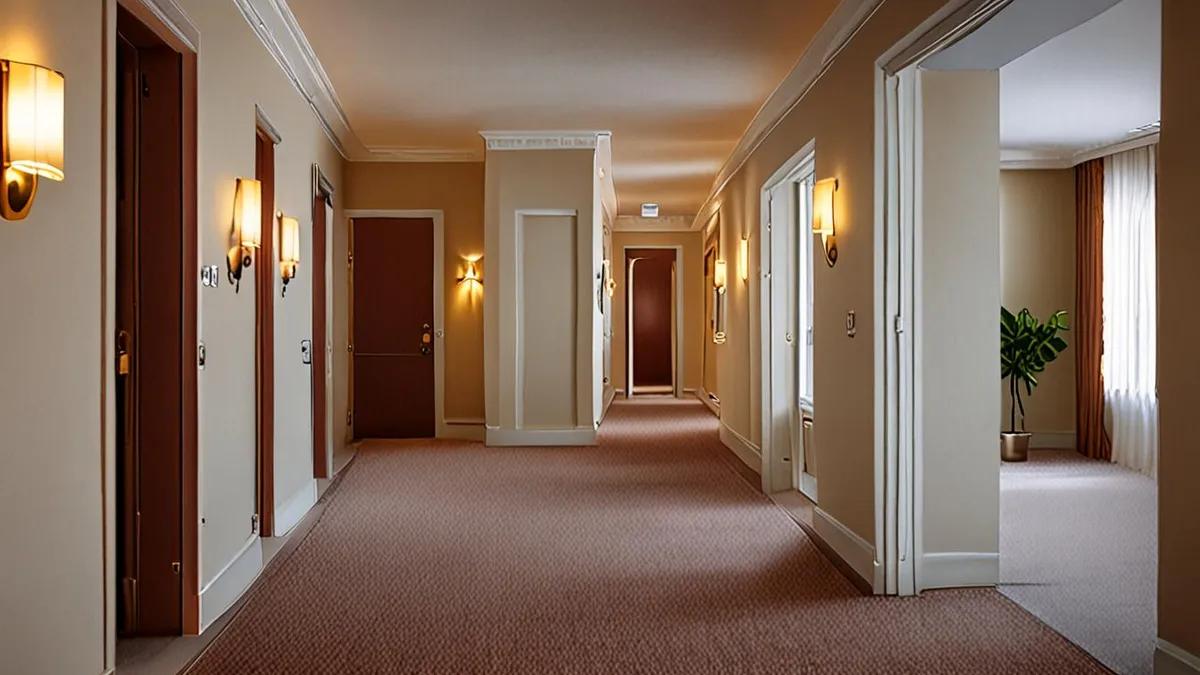
Once you have picked a quiet-friendly hotel, the specific room you get matters just as much. Request rooms on floors 4-8: high enough to rise above street level, bus stops and late-night sidewalk conversation, but below the rooftop bars and gyms whose thumping equipment and music travel downward. This middle band is where the least street and lobby noise tends to collect.
Distance from the building’s own machinery is the second big factor. Rooms 2-4 doors away from elevators, ice machines and vending areas are noticeably quieter, since the mechanical hum and the hallway traffic around them run late into the night. When you make your request, be specific: “a room a few doors down from the elevators, away from the ice machine” gives the front desk something concrete to work with.
- Corner rooms: These usually share only one or two walls with neighbors instead of three, which cuts neighbor noise dramatically and often gives you windows on two sides.
- End-of-hallway rooms: Fewer guests walk past your door, and you avoid the gathering point near elevators entirely.
- Rooms away from service areas: Housekeeping closets and staff corridors see early-morning trolley traffic, so ask what sits behind the wall of the room you are offered.
Be equally careful about what your room faces. Avoid rooms overlooking courtyards with late-night kitchens or pool equipment, since extraction fans and delivery clatter can be worse than street noise. If a hotel advertises standout amenities, such as the descriptive anchor text some city properties offer, ask whether the pool pumps or bar speakers sit near your wing. A river view with quiet water traffic is usually a far safer bet than a courtyard facing the kitchen.
Packing a Travel Sleep Kit
A good night’s sleep in an unfamiliar room starts with what’s in your bag. Even a well-chosen hotel can have an unexpected street party, a late-arriving neighbor, or a rattling air conditioner, and a small sleep kit turns those surprises into minor inconveniences instead of ruined nights. The whole kit fits in a single zip pocket and weighs almost nothing, so there’s no reason to leave home without it.
Think of the kit as three layers of defense: something to block noise, something to mask it, and something to manage light. Each layer covers a different kind of problem, and together they handle almost anything a hotel can throw at you.
- Foam earplugs: These are the backbone of the kit and typically reduce perceived noise by 20-30 decibels. Bring several pairs, not just one, since foam compresses and loses shape after a night or two of use. Roll each plug tightly between your fingers before inserting it so it expands fully in the ear canal.
- A white noise app or portable machine: Corridor chatter, door slams and hallway footsteps generally fall in the 40-60 decibel range, and a steady sound layer masks them far better than silence does. Download the app and a few sound options before you leave, since hotel Wi-Fi can be slow or unreliable when you arrive tired at midnight.
- A door draft stopper: Hallway noise doesn’t just come through walls; it seeps under the door all night long. A simple fabric or foam stopper laid against the gap makes a surprising difference, and it doubles as a light blocker for rooms where hallway light glows under the door.
- An eye mask: City rooms glow with streetlights, neon signs and neighboring towers, and even modest light exposure can fragment deep sleep. Pair the mask with whatever curtain adjustments the room allows so your eyes get a truly dark environment.
Pack the kit in your carry-on rather than your checked luggage. If your flight is delayed or you arrive at an odd hour, you’ll want it within reach the moment you check in, not buried in a suitcase at the bottom of a luggage cart.
Setting Up Your Room for Better Sleep
You’ve checked in, and the room is finally yours. Before you unpack a single bag, spend five minutes setting the space up for sleep. A few small adjustments at arrival save you from discovering problems at two in the morning, when switching rooms or fixing anything becomes far harder. Think of it as a quick inspection: you’re confirming that the room you requested actually delivers what you asked for, and if it doesn’t, you still have time to do something about it while the front desk has options.
- Test the window seals first. Stand by the closed window for a moment and listen. If you can hear traffic, sirens or street conversation clearly, the seals may be worn or the room may simply face a loud side. Go back to the front desk immediately and ask to switch; the earlier you raise it, the more alternative rooms will still be available. If the noise is mild but noticeable, closing the curtains and running the fan may be enough to cope.
- Close the blackout curtains fully. Pull them edge to edge and check for light gaps around the sides and bottom. Overlapping or clipped curtains block both city glow and early morning sun, which matters more in bright downtown rooms than most travelers expect. Well-fitted curtains also add a thin layer of sound insulation against street noise.
- Angle the bed away from the door and the connecting wall. If the bed layout allows any flexibility, position yourself so your head is farthest from the door and from any door to the neighboring room. Distance from these noise sources means less sound reaches your ears at pillow level, where it’s most disruptive. Even shifting the pillow to the opposite end of the bed can help.
- Run the HVAC fan as white noise. Set the fan to a steady low speed rather than letting it cycle on and off. That constant, gentle hum steadies the room’s sound environment and masks small noises like hallway footsteps or a neighbor’s television, at no extra cost. If the fan is too loud or rattles, a white noise app on your phone works just as well.
- Silence the room phone and your devices. Hotel phones ring for wake-up calls, wrong numbers and front desk tests, often at the worst moments. Unplug it or set it to silent, then switch your phone and tablet to do-not-disturb before bed so a late notification doesn’t jolt you awake. Double-check that alarms from previous guests or old settings aren’t still programmed into the clock radio.
Once these steps are done, the room is genuinely ready. You can shower, unwind and fall asleep knowing you’ve already handled the issues that otherwise tend to surface at the worst possible hour. It takes less time than unpacking, and it pays off every single night of your stay.
What to Do If Noise Strikes Anyway
Even careful planning can’t prevent every noisy night. A wedding party books in late, a neighbor decides to watch television at full volume, or the room you received isn’t the one you requested. What separates a rough night from a ruined trip is how quickly you act.
Act the same night, not the next morning
The moment noise becomes a problem, call the front desk. Don’t lie there hoping it will stop, and don’t save the complaint for checkout, when nothing can be done. Calling the same night gives the hotel its best chance to help, because staff can check availability in real time and move you before you’ve lost the evening. Be direct and polite: ask specifically for the quietest available room, and remind them that you noted a quiet-room preference when you booked. Referencing your original request signals that this was a commitment on their part, not a new favor.
If no rooms are free
On busy nights, a move may not be possible. In that case, ask for a room in the quiet wing of the property, or push for an upgraded high-floor corner room if one exists. Properties often hold better rooms for loyalty members or upgrades, and a genuine noise complaint is a reasonable reason to unlock one. If the hotel truly has nothing, ask what they can offer instead, whether that’s a late checkout the next morning or another gesture that acknowledges the disruption.
Finally, document the issue while it’s fresh. Note the time you called, who you spoke with and what was promised, and take a brief recording or photo if the noise is obvious. If you plan to raise the problem with the booking platform afterwards, that record turns your complaint from an opinion into a case, and it makes a partial or full refund far more likely.
Sleeping Soundly, Wherever You Stay
That scenario of arriving worn out from a long journey, only to lie awake listening to street traffic, rumbling elevators, or voices through thin walls, is entirely avoidable. A quiet hotel room rarely happens by luck. It comes from smart booking, careful review research, and clear room requests made before and during your stay.
The biggest wins are simple: ask for a room on floors 4-8, choose a corner room, and stay a few doors away from elevators and ice machines. Pack a small sleep kit with earplugs and a white noise option, and if noise strikes anyway, call the front desk that same night for a room change. Do these things consistently, and better sleep follows you wherever you travel. If you have your own trick for sleeping well in hotels, share it in the comments below.